Mapping Resilience: Identifying and Strengthening Protective Factors
Grounded in the work of Dr. Nan Henderson, this interactive session introduces participants to internal and external protective factors that strengthen resilience and buffer against adversity. Participants will actively map their own protective factors, gaining deeper insight into the strengths, relationships, and supports that sustain them personally and professionally.
Moving beyond personal reflection, this practical and adaptable tool can be used with students, colleagues, families, and community members — empowering others to recognize their resilience and build upon what is already strong.
Together, we will practice intentionally shifting our lens — learning to see the green through the red — recognizing strengths even in the midst of challenge. Building resilience takes awareness, effort, and commitment, but when we lead with a strengths-based perspective, the impact is meaningful and lasting.
All instructors are certified through extensive training with Dr. Nan Henderson through the Resiliency in Action.
Email Jessica Thompson to request a training: Jessica.Thompson@essexcountyny.gov
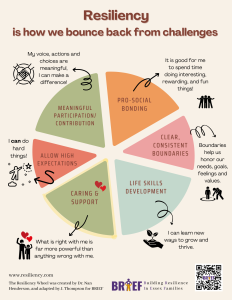
External Protective Factors identified by Dr. Nan Henderson
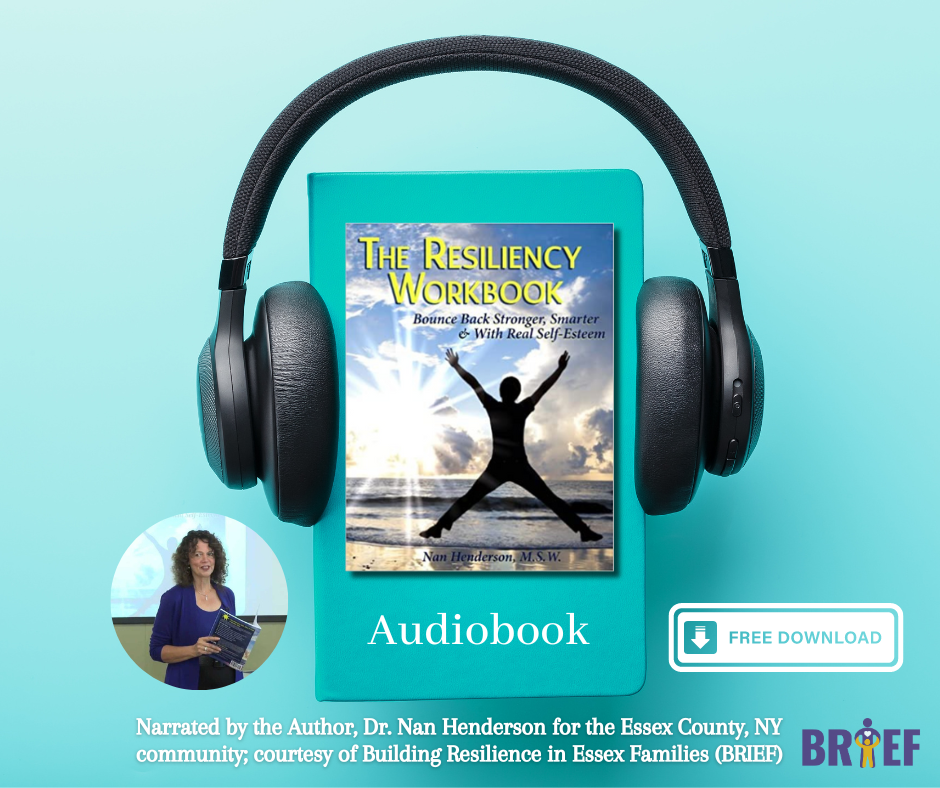
Free: Download Dr. Nan Henderson’s Resiliency Workbook Audiobook and Worksheets
Please read instructions:
Click orange button below
Then, enter password WORKBOOK2023 to download free audiobook & worksheets.
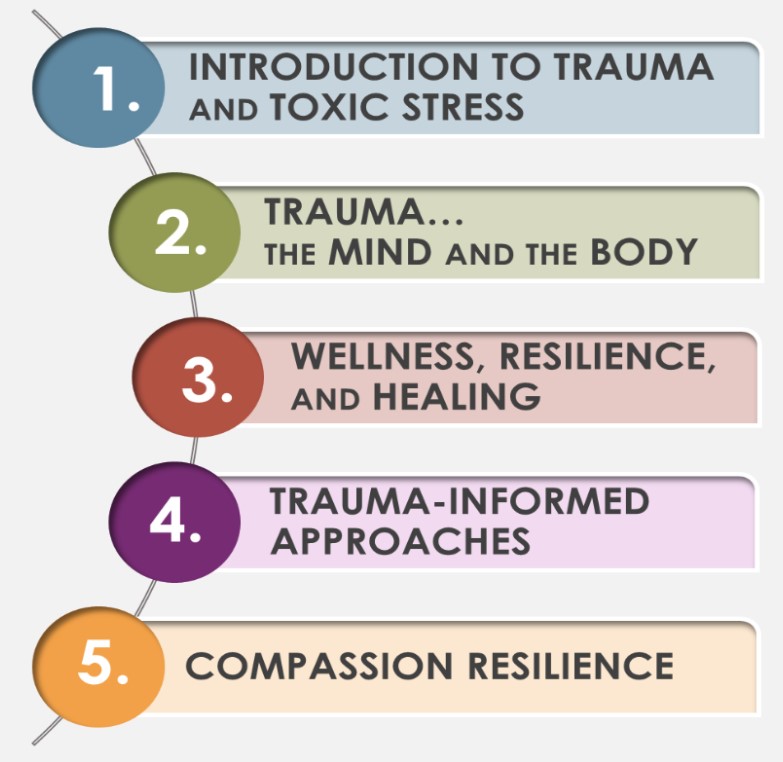
Trauma Responsive and Resilience Informed Care Training:
Provides foundational knowledge on the effects of toxic stress, trauma, and adversity on health and well-being. In addition, this training content includes an exploration of the interconnectedness of racism and trauma. This OMH-approved training serves as a standard approach and increases the capacity of individuals and organizations to promote trauma-responsive, equity-based practices that are sustainable and support holistic health across Essex County and and state-wide. Free for organizations unable to fund through their own professional development budgets. 6 hours total (can be delivered in three 2-hour sessions).
Suicide Prevention: QPR Training
If you or someone you know are struggling or at risk, please call or text 988immediately.
QPR stands for Question, Persuade, and Refer— the 3 simple steps anyone can learn to help save a life from suicide.
Free for individuals serving Essex County residents and community members.
Just as people trained in CPR and the Heimlich Maneuver help save thousands of lives each year, people trained in QPR learn how to recognize the warning signs of a suicide crisis and how to question, persuade, and refer someone to help.
Each year thousands of Americans, like you, are saying “Yes” to saving the life of a friend, colleague, sibling, or neighbor.
QPR can be learned in a Gatekeeper course in as little as one hour.
Course is taught in a clear, concise format using the latest in educational technology and practices.
Key points covered in training:
How to Question, Persuade and Refer someone who may be suicidal
How to get help for yourself or learn more about preventing suicide
The common causes of suicidal behavior
The warning signs of suicide
How to get help for someone in crisis
>>>PLEASE READ EVERY STEP: Instructions for trainees to access this 1 hour self-paced QPR certification course are below. Fee is pre-paid by BRIEF.
Mental Health First Aid (MHFA) is an evidence-based training that teaches participants how to recognize the signs and symptoms of mental health and substance use challenges, respond with confidence, and connect individuals to appropriate support and resources. Just as CPR prepares someone to respond to a physical health emergency, MHFA equips community members with practical skills to provide initial support until professional help or other supports are available.
As part of BRIEF’s commitment to building resilient communities across Essex County, we are proud to offer Mental Health First Aid trainings for adults, youth-serving adults, and teens. Whether you are a parent, educator, first responder, healthcare professional, employer, or community member, MHFA provides valuable tools to reduce stigma, increase understanding, and strengthen our ability to support one another. Together, we can create a more informed, compassionate, and resilient Essex County.
Scroll below to learn more about the different Mental Health First Aid training opportunities available throughout Essex County and find the training that’s right for you.
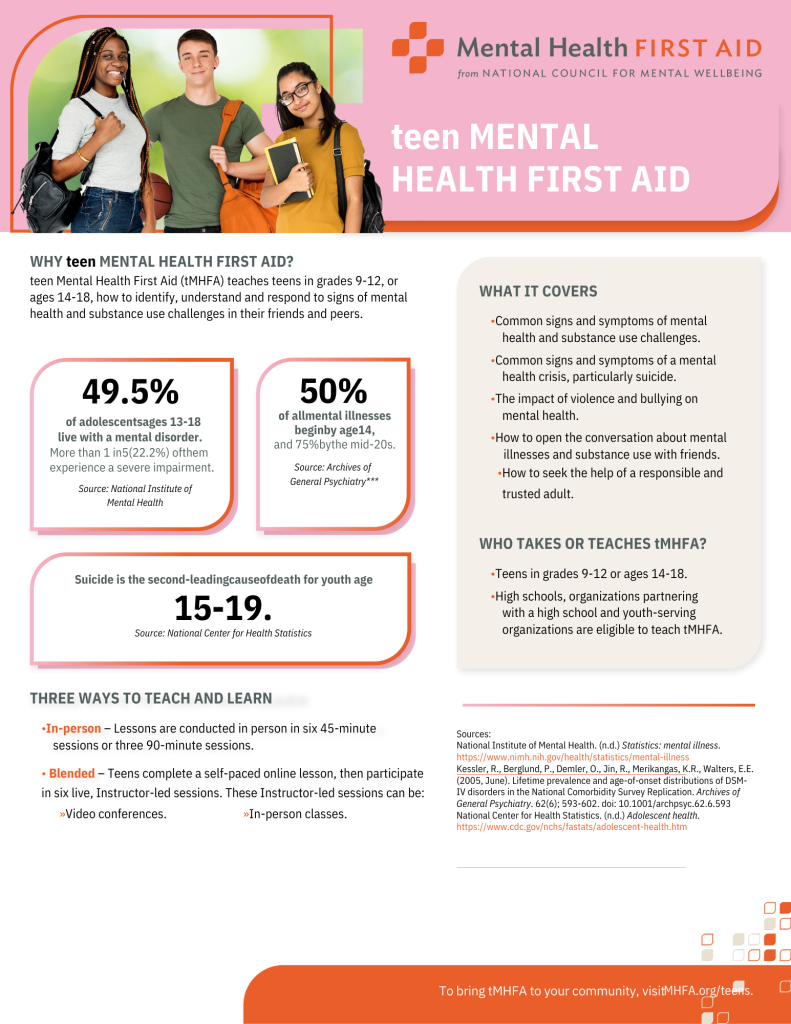
Teen Mental Health First Aid (tMHFA) is an evidence-based training designed for students in grades 9–12 (ages 14–18). Delivered in partnership with high schools, the program teaches teens how to recognize the signs of mental health and substance use challenges, support a friend in need, and connect them with a trusted adult. By building mental health literacy, reducing stigma, and encouraging early help-seeking, Teen MHFA helps create safer, more supportive school communities where students are empowered to care for themselves and one another.
Teen Mental Health First Aid is currently available at no cost to all Essex County schools through funding provided by the New York State Office of Mental Health. To learn more about this initiative and how to bring Teen MHFA to your school, contact Jessica Thompson: Jessica.Thompson@essexcountyny.gov
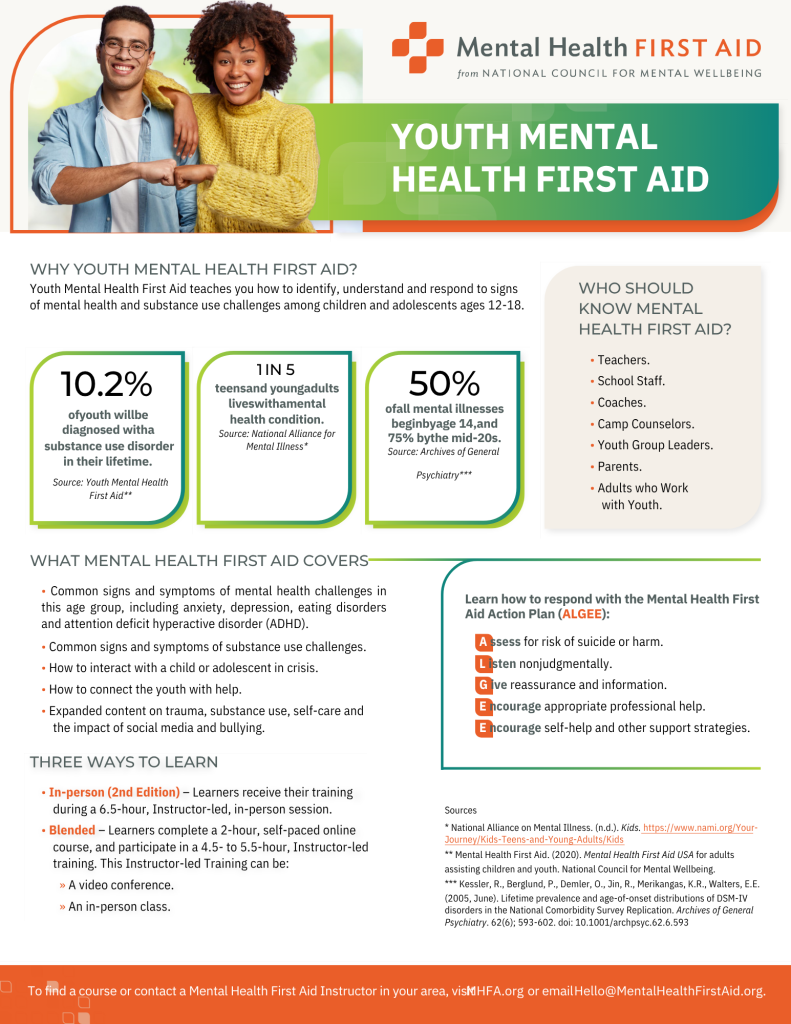
Youth Mental Health First Aid (YMHFA) is an evidence-based training designed for adults who regularly interact with young people ages 12–18, including educators, school staff, coaches, youth group leaders, camp counselors, parents, and other caring adults. Participants learn how to recognize the signs of mental health and substance use challenges, respond to a young person experiencing a crisis or developing concern, and connect them with appropriate support. The training also covers topics such as anxiety, depression, trauma, substance use, bullying, social media, and self-care, helping adults build safer, more supportive environments where youth can thrive.